Heritage & Roots · Explorers
How tin made Ipoh
By Aevum Editorial · Published · Updated
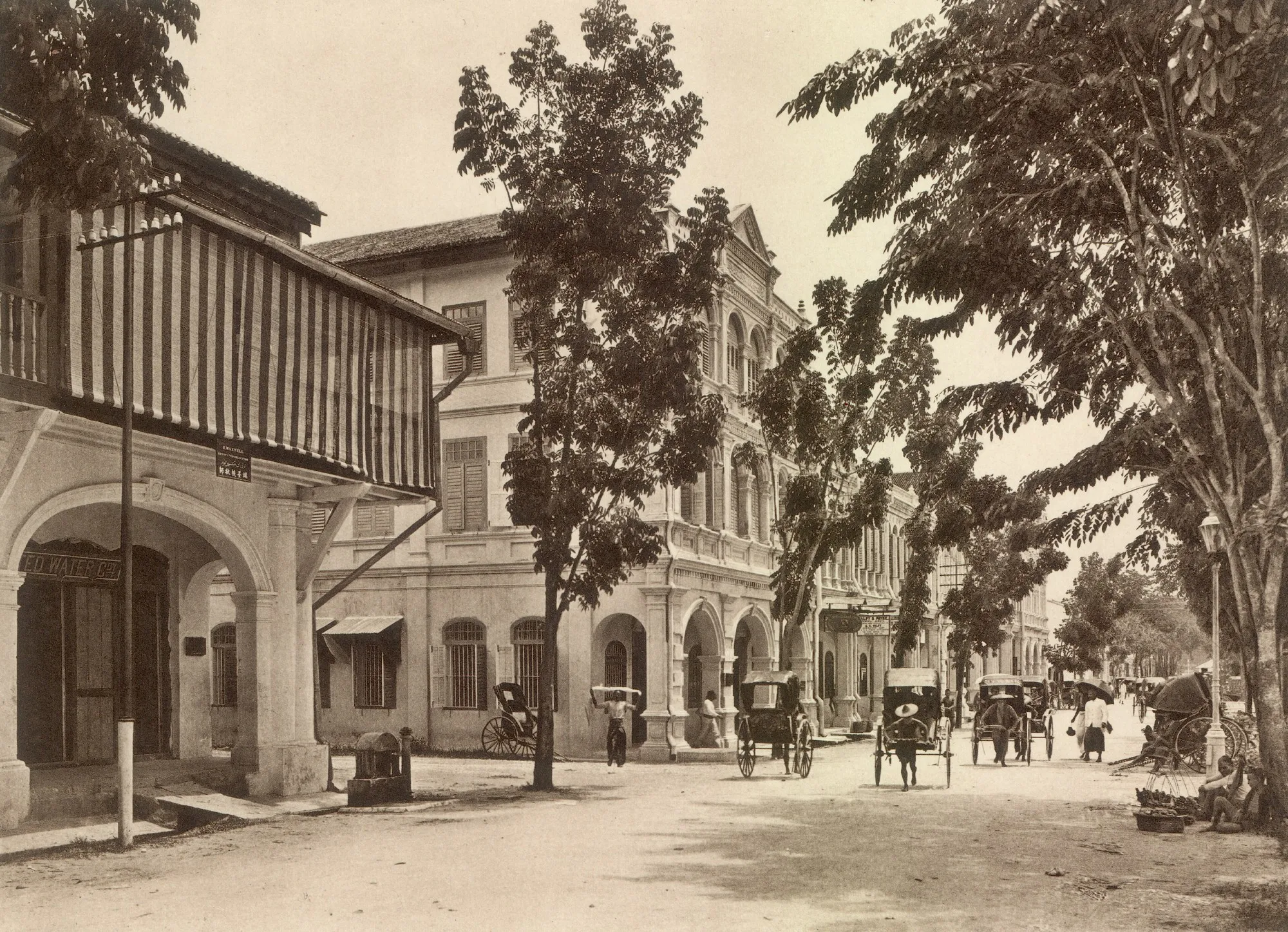
In short: Ipoh exists in its present form because of tin. From the 1880s, the alluvial tin of the Kinta Valley in Perak drew Chinese miners, British capital and new technology. Within about thirty years, a small riverside village had grown into the second-largest town in the Federated Malay States. Tin paid for its shophouses, schools and clubs, and brought together the communities that still shape the city. The industry collapsed in 1985, but its traces remain across the valley.
Why is Ipoh associated with tin mining?
Because Kinta was tin country, and Ipoh was its town.
Kinta was the main tin-bearing area of the country, and Ipoh has long been called the centre of Malayan tin mining. As one local historian puts it: “It was tin that built Ipoh.”
Before the rush
Ipoh didn’t begin as a mining town. It is said to have started as a Malay and Orang Asli village, before tin mining reached it.
The name is believed to come from the upas tree, and Chinese residents also called the place “Paloh”. Malay miners worked Kinta’s tin before the Chinese-led rush, in open-cast pits, and a British official was already writing about Kinta’s mines in 1879.
The Kinta tin rush
The rush began in the 1880s; historians date it to 1880 or 1884. As the older tin field at Larut, around Taiping, began to run out, many miners and mine owners moved south to Kinta. The richest deposits are said to have been found here in the 1870s, and by 1889 Kinta had become the centre of the industry.
Chinese mining syndicates (kongsi) did much of the work. Their key tool was the chain pump: a wooden bucket chain driven by a water wheel. It drained the pits so miners could dig deeper, and one tin-museum curator says this drainage advantage is how Chinese miners came to dominate the industry.
New technology, new money
Hydraulic mining, which washes away whole hillsides with high-pressure water, is said to have been introduced near Ipoh in 1892. The Gopeng mines became known for it.
When the silting Kinta River could no longer carry the ore, the railway did: the Kinta Valley Railway between Ipoh and Telok Anson (now Teluk Intan) is said to have been completed in 1896. Bucket dredges arrived in Malaya just before the First World War, and during the 1920s, it’s said, they worked their way across Perak’s river valleys.
Once the railways came, historians say, Kinta became the world’s single largest tin field; one even calls it “the richest tin mining district in the world”. These are historians’ judgements, not measured rankings.
A town built by miners
By 1895, Ipoh was the largest town in Perak and the second largest in the Federated Malay States. Much of that growth, it’s been argued, came from private enterprise rather than the colonial government.
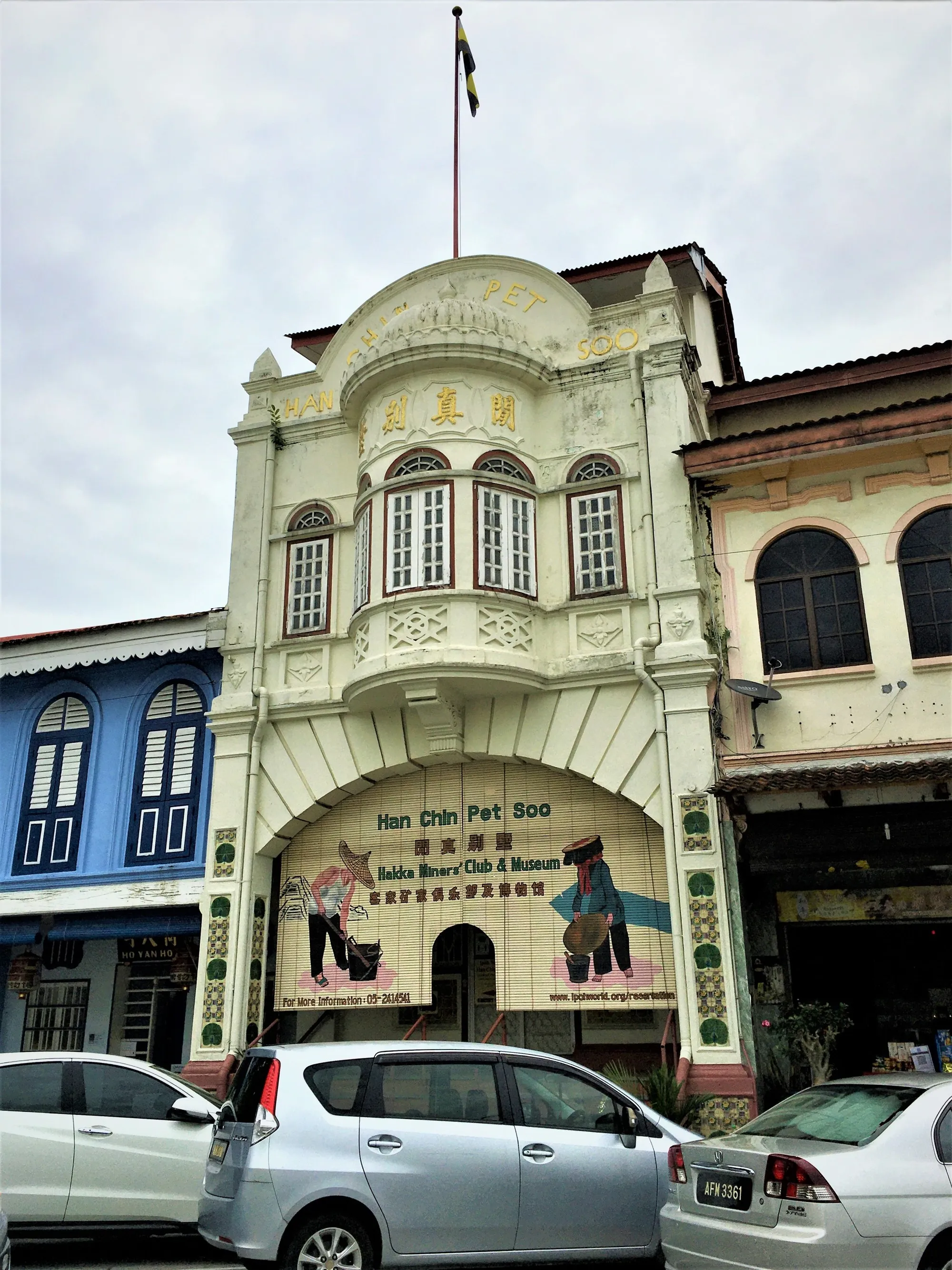
Wealthy mining towkays, many of them Hakka, shaped the town: Yau Tet Shin, Foo Choo Choon, Leong Fee and Leong Sin Nam among them. They founded schools, chambers of commerce and mining associations, and several of Ipoh’s streets carry their names.
After a fire in 1892, brick shophouses replaced older timber and attap buildings. Between 1905 and 1914, the town spread across the Kinta River to form New Town, much of it developed by Yau Tet Shin. His story, and that of the lanes he built, is in our post on Concubine Lane.
In 1893 Leong Fee founded a clubhouse for Hakka mine owners, Han Chin Pet Soo. Today the building is a museum of Hakka mining life run by the heritage group Ipoh World.
Many communities, one industry
Tin brought people from many places. Hakka and Cantonese migrants made up much of the Chinese population. A well-known Chinese saying holds that “the Hakka opened the town, and the Cantonese made it prosper”, though local scholars warn it’s only part of the picture.
At the pioneering Gopeng hydraulic mine, about forty Malay and Tamil women are said to have panned for ore. Indian migrants are also said to have come to work on rubber estates around Ipoh and as clerks for the British. Ipoh’s food culture grew out of this mix, as our posts on Ipoh food and white coffee explain.
Perak’s state capital moved from Taiping to Ipoh in 1937, and Ipoh was declared a city on 27 May 1988.
When the tin ran out
In October 1985, the international tin price collapsed after the International Tin Council could no longer support it. Mines across Malaysia closed. In Kampar, in the Kinta Valley, mines and the businesses that depended on them shut, and thousands of workers lost their jobs. After 1985, local historians note, Ipoh’s community leaders came mostly from property development and logistics rather than mining.
What tin left behind
Across the valley, you can still see mining pools, sand tailings, old dredges and sluices. In October 2018, the Kinta Valley was declared Malaysia’s second National Geopark, covering 1,952 square kilometres, with its mining remains part of the geotourism story. Some researchers have even argued that the post-mining landscape could be considered for World Heritage listing.
What is still debated
- When the rush began: 1880 or 1884, depending on the historian.
- Where “Paloh” comes from: one account links it to the Malay palong, a mining sluice.
- The geopark’s date: 2017 or October 2018, depending on where you look.
If your family worked the Kinta mines, we would like to hear the story: hi@aevum.my.
Report an error · Something wrong, incomplete or culturally insensitive? Tell us and we aim to review it within 5 working days.
Questions
Why is Ipoh associated with tin mining?
Ipoh grew as the main town of the Kinta Valley in Perak, often described as one of the richest tin fields of the colonial era. From the 1880s, miners, traders and investors poured into the valley, and the town grew around their wealth. By 1895 it was the largest town in Perak.
When did tin mining in Ipoh end?
Mining declined over many decades, but the turning point came in October 1985, when the international tin price collapsed. Mines across the Kinta Valley closed, and many businesses that served them closed too. By 2019, officials said the country had seen no large-scale tin mining in recent years.
Who were Ipoh's tin miners?
Most labour came from southern China, especially Hakka and Cantonese migrants, many of whom moved south from the older tin field at Larut. Malay miners worked Kinta's tin before the rush, and Malay and Tamil women also panned for ore at some mines. Wealthy Chinese mine owners, or towkays, funded much of the town.
What is left of Ipoh's tin-mining past?
Former mining pools, old dredges and mining structures dot the Kinta Valley, which was declared a National Geopark in 2018. In Ipoh itself, the tin era survives in Old Town and New Town shophouses, in streets named after mining towkays, and in buildings such as the former Hakka miners' club, Han Chin Pet Soo.
Sources
Ipoh City Council (MBI), “Info Ipoh”; N. R. Jackson, Journal of Southeast Asian History (1963); Ho Tak Ming, Ipoh: When Tin Was King (Perak Academy, 2009), Introduction; Corey Ross, Environmental History (2014); Phin-Keong Voon, Malaysian Journal of Chinese Studies (2024); Zakaria et al., Planning Malaysia (2022); Perak Land and Mines Office (PTG Perak), Taiping district history; China Press (2020); 访问 The Interview; Malaysiakini column by Pek Wee Chuan; Ipoh World; Malay Mail (2015, 2018); New Straits Times (2022); Ipoh Echo; Ministry of Water, Land and Natural Resources (2019); Lembah Kinta Geopark; Ahmad and Jones, Environment-Behaviour Proceedings Journal (2019); J. M. Pladdet, Wageningen University (2019).