Arts & Creative · Explorers
Ipoh street art, explained: who painted the Old Town murals?
By Aevum Editorial · Published · Updated
In short: Ipoh Old Town’s murals come mainly from two sources. Ernest Zacharevic, a Lithuanian-born artist based in Penang, painted seven for OldTown White Coffee’s Art of OLDTOWN project in 2014. Local artist Eric Lai began painting the back lanes in 2013, and many of his works now line Ipoh Mural Art Lane. Some murals have since been painted over or demolished, and others have faded and been restored.
Who painted the murals in Ipoh Old Town?
Wander Old Town and you’ll meet two main groups of murals. One is a set of seven by Ernest Zacharevic, some with a real object fixed to the wall. The other fills whole back lanes and is largely the work of Eric Lai, with other Malaysian artists adding more over the years. Here’s who they are, and why the walls you see today don’t always match older photos.
Ernest Zacharevic and the Art of OLDTOWN
Zacharevic was born in Lithuania in 1986 and is based in Penang. He was already known for the murals he painted in George Town in 2012.
In May 2014 OldTown White Coffee and Ipoh City Council commissioned him to paint Ipoh. The project, called the Art of OLDTOWN, drew on the town’s coffee culture and its link to white coffee. He completed seven murals in about a month and a half, and they were unveiled on 23 June 2014.
The seven were:
- Hummingbird, Jalan Panglima car park
- Girl, Jalan Bandar Timah
- Evolution, Jalan Bijeh Timah
- Trishaw, Concubine Lane 3
- Paper Plane and Kopi-O, Jalan Tun Sambanthan
- Old Uncle with Coffee Cup, Jalan Padang
Some of them mix paint with real objects. He cut items such as bicycles, trishaws and chairs in half and fixed them to the wall, so the scene seems to step off the surface. That’s why the trishaw mural is often listed as a 3D work.
Eric Lai and Ipoh Mural Art Lane
Eric Lai is an artist and art teacher who runs an art school, ArtGene Studio, in Bercham, Ipoh. In 2013 he painted seven murals in the lane between Jalan Masjid and Jalan Sultan Iskandar (Hugh Low Street). It’s said he was inspired by Zacharevic’s wall art in Penang.
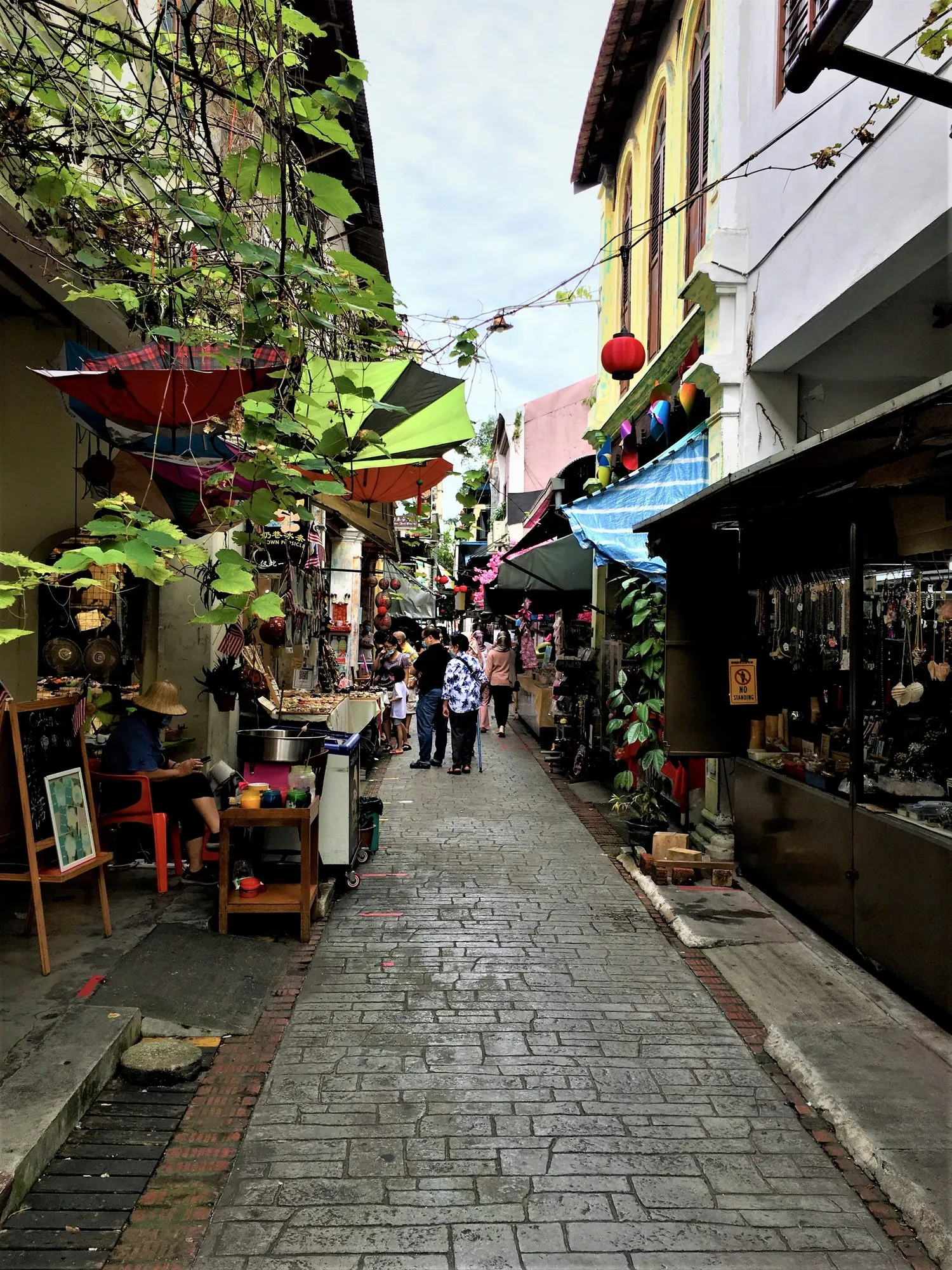
His first murals there had cultural themes. Later ones showed children’s games, such as blowing bubbles and playing hide and seek.
The work grew into Ipoh Mural Art Lane, a community programme run by the state tourism and culture committee and Ipoh City Council. It was launched on 14 December 2014 on Jalan Masjid.
Lai’s two main themes are Malaysia’s many cultures and childhood. Along the lanes you’ll find Chinese opera, Thaipusam, Deepavali, Hari Raya, lion dances, dulang washers, rubber tappers and gamelan players, alongside hopscotch and other traditional games.
Why some murals changed or disappeared
Street art doesn’t stay still, and Ipoh’s is no exception.
Painted over. In October 2017 the owner of the building carrying Zacharevic’s Girl with Stool and Birdcage painted over it during a renovation. The artist said he wasn’t angry, and that it had been agreed from the start that the owner could remove the mural if needed.
Demolished. In July 2022 the shophouse carrying Kopi-O was pulled down to make way for a hotel. A report at the time said the Hummingbird wall, beside the same site, might be affected too.
That left five of the original seven.
Faded. Sun and rain take their toll. By 2017 many of the back-lane murals had faded, and local businesses asked the city council to help repaint them, it was reported. In March 2024 Zacharevic is reported to have returned at OldTown’s invitation to restore four of his own faded murals, including Old Uncle, Paper Plane and Trishaw.
The lesson for visitors: these murals sit on privately owned walls, so they can change. Enjoy them while they’re here.
More walls to look for
Ipoh’s street art keeps growing. Lorong Seni, part of the Lorong Panglima area, is promoted by the city council as a small arts lane with murals by Malaysian artists. On Jalan Leong Sin Nam, a mural honours COVID-19 frontliners. It was painted in December 2021 in a project of the National Art Gallery and the tourism ministry.
What is still debated
- Exact locations. Sources place the Girl mural on Jalan Bandar Timah or on Jalan Bijih Timah, and Old Uncle on Jalan Padang or Jalan Bandar.
- Names. Murals go by different names in different guides. Old Uncle with Coffee Cup and Kopi-O, for example, appear under other titles.
- Which walls survive. Lists vary in age, so the count may have changed since the last report.
Have a photo of a mural that’s gone, or a story about one? Write to us at hi@aevum.my. If you run a venue near the murals, claiming a listing is coming soon: see aevum.my/businesses.
Report an error · Something wrong, incomplete or culturally insensitive? Tell us and we aim to review it within 5 working days.
Questions
Who painted the murals in Ipoh Old Town?
The headline set is by Ernest Zacharevic, a Lithuanian-born artist based in Penang. He painted seven murals for OldTown White Coffee's Art of OLDTOWN project, unveiled in June 2014. Local artist and art teacher Eric Lai painted many others, starting in 2013 in the back lanes near Jalan Masjid and Jalan Sultan Iskandar.
How many Zacharevic murals are left in Ipoh?
He painted seven in 2014. One, Girl with Stool and Birdcage, was painted over in October 2017, and Kopi-O was demolished with its building in July 2022 to make way for a hotel. That leaves five, though walls can change, so check before you set out to see a particular one.
Why did some Ipoh murals disappear?
Zacharevic's murals were painted on private walls with the owners' agreement, so an owner can repaint the wall or demolish the building. One Zacharevic mural was painted over during a renovation, and another went when its shophouse was pulled down. Sun and rain also fade the paint, so several murals have been restored.
Where is Ipoh Mural Art Lane?
Ipoh Mural Art Lane is in the back lanes around Jalan Masjid in Old Town. It began as a community programme run by the state tourism and culture committee and Ipoh City Council, and was launched on 14 December 2014. Many of its murals are by Eric Lai, on cultural themes and children's games.
Sources
Malay Mail (2014, 2017); Ipoh Echo (2013, 2014); Ipoh Tourist Information Centre, Ipoh murals guide; Sin Chew Daily (2022, 2024); Oriental Daily (2017); myipoh.my (2022); Wikipedia, “Ernest Zacharevic” (cross-check only).