Heritage & Roots · Explorers
Han Chin Pet Soo: the story of a Hakka miners' club
By Aevum Editorial · Published · Updated
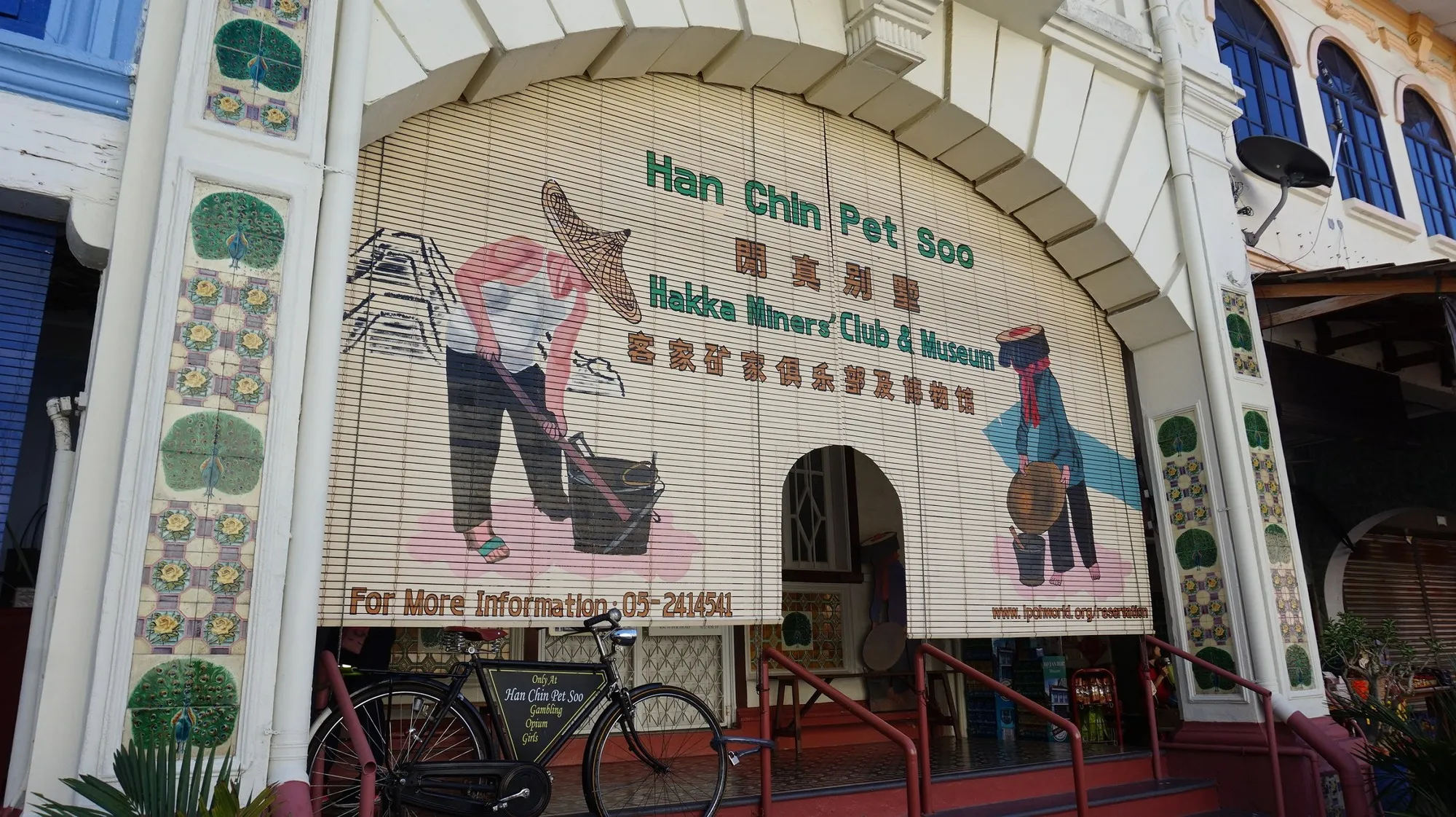
In short: Han Chin Pet Soo (闲真别墅) is the clubhouse of Ipoh’s Hakka tin miners, on Jalan Bijeh Timah in Old Town. The tin miner Leong Fee founded the club in 1893 in a two-storey shophouse, and members rebuilt it as three storeys in 1929. For decades only Hakka members and their guests could go inside. Since 2015 it has been a museum, and you can visit by appointment.
What is Han Chin Pet Soo?
From the street, it’s hard to miss. Among the two-storey shophouses of Jalan Bijeh Timah (once Treacher Street), one front rises to a third floor, with a domed centre and the name Han Chin Pet Soo on the balcony.
This was a private club for Hakka tin miners. For decades, the people of Ipoh walked past without ever seeing inside. Today it tells the story of the men who made money in the Kinta Valley’s tin boom, and of how they spent it.
A club for Hakka miners
The club was founded in 1893 by Leong Fee, also known as Liang Pi Joo, a Hakka tin miner and towkay. It started in a two-storey shophouse on the same site.
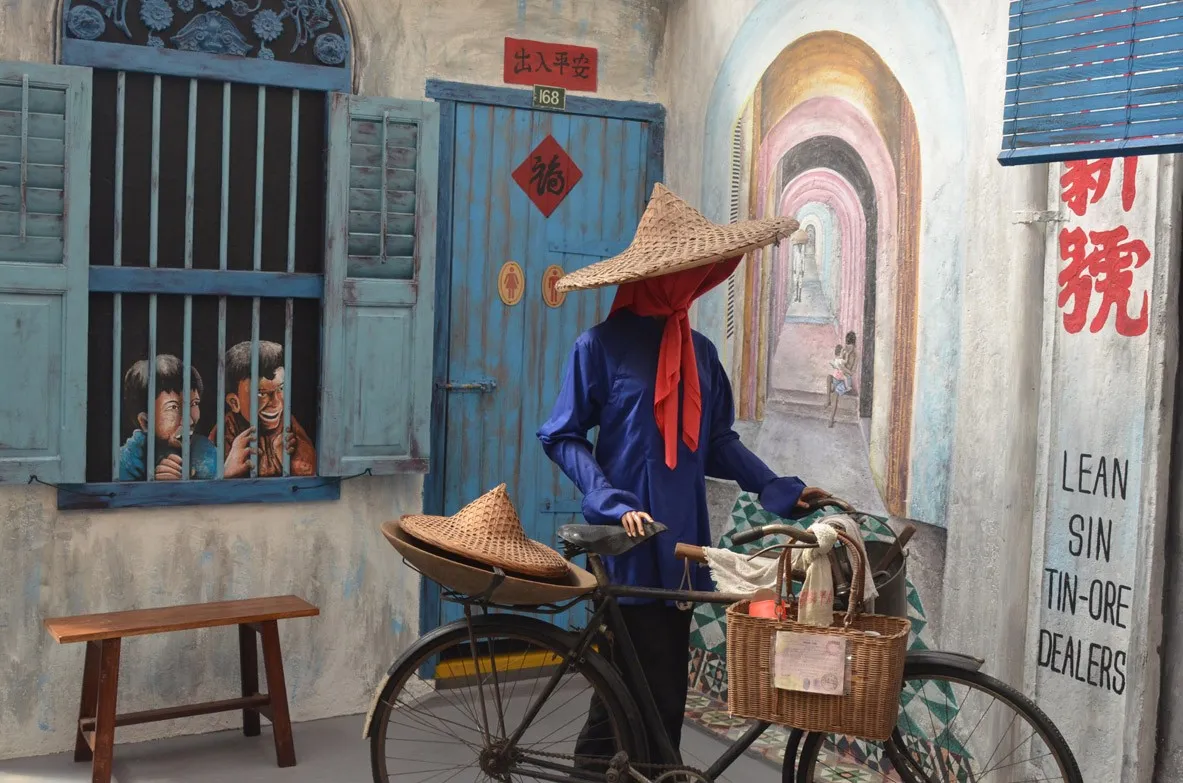
Membership was for Hakka miners and the Hakka community. Members came to meet friends, eat and play mahjong. Wives and children were not allowed in, the museum’s manager has said.
The first name was Han Chin Pat Sou. Han Chin was the name given to the building, and Pat Sou is Hakka for villa. The spelling is said to have changed to Pet Soo sometime in the 1950s.
From founder to members
Leong Fee paid for the club himself until he died in April 1912. His son, Leong Yin Khean, then took charge.
In 1927 the son sold the building to the members at well below its market value. From then on, the club belonged to the people who used it.
The 1929 rebuild
In 1929 the members rebuilt the clubhouse on the same site. It became the three-storey building you see today, with an Art Deco-style front, a ribbed dome and geometric windows.
Look at the ground floor and you’ll notice it sits well above the street, reached by steps. It’s said this was done because the nearby Kinta River had flooded the area. The same account says the riverbanks were raised later, so the high floor became less necessary, but it does make the building stand out.
The club celebrated its 37th anniversary on 5 May 1930 with a house-warming party. A photograph of the occasion shows the building lit and decorated with electric lights.
Mahjong, opium and the “four evils”
Life inside the club reflected its time. Members gambled and smoked opium on the premises. The museum’s manager has explained that these activities were not illegal then, and that opium and prostitution were even taxed.
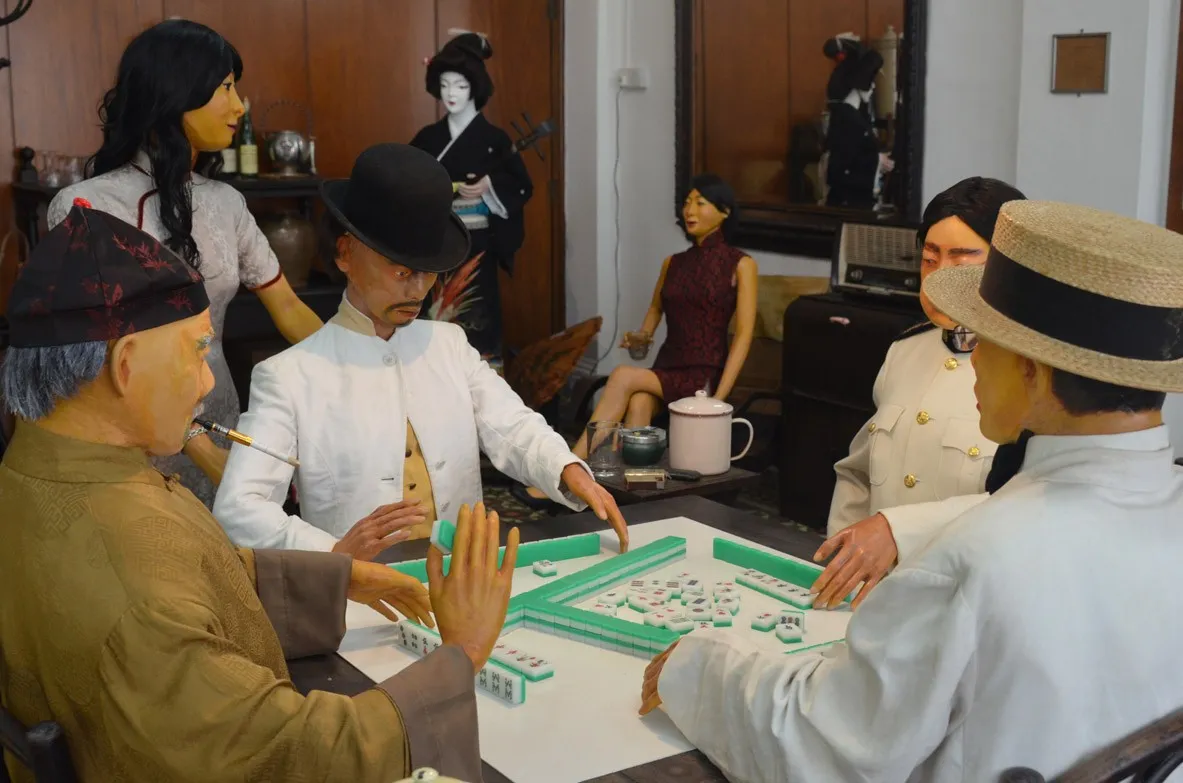
The museum doesn’t hide this side of the story. One floor shows what it calls the “four evils”: gambling, prostitution, opium and links to secret societies. You’ll see a recreated opium den, gambling tables and figures dressed in the style of the 1930s.
Decline and restoration
As the tin industry faded, so did the club. Members kept using the building for mahjong, but they could no longer afford to maintain it. Parts fell into poor repair, with termites in the floorboards and staircases.
The members eventually voted to lease the building to IpohWorld, a local heritage group. Restoration became a community project led by Ian Anderson, a retired Royal Navy commander, and his team.
The museum opened on 5 February 2015. Inside, rooms have been restored to how they looked around 1929–1930. The kitchen has charcoal and wood-fired stoves again. Other sections explain how tin was mined and how Hakka miners lived. Students of a local art institute, it’s said, painted murals inside showing scenes from the tin-mining days.
Visiting Han Chin Pet Soo
Visits are by appointment only, booked through IpohWorld’s website. Bring your confirmation email, printed or on your phone. Places are limited, so book ahead.
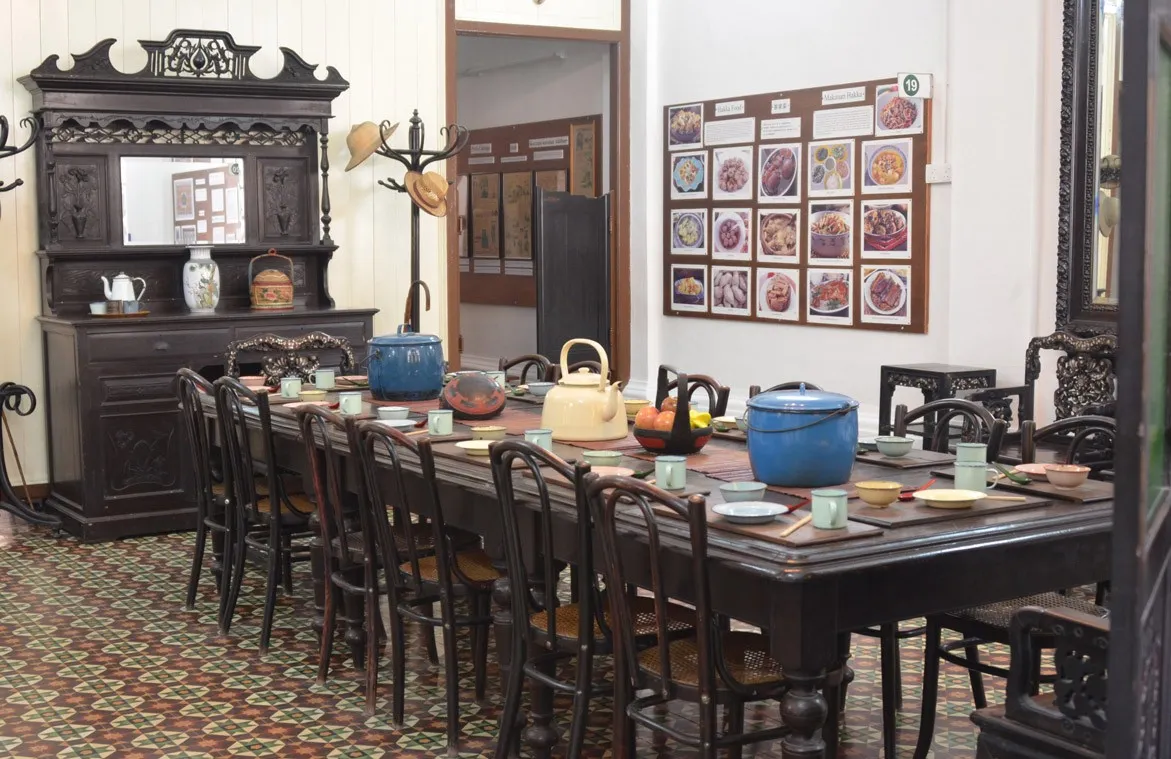
It’s a short walk from the other Old Town sights. Allow time to read the displays: the building tells its story room by room.
What is still debated
- How much of the club’s colourful past is recorded. Much of the early history is said to come from the club’s own written history, compiled by a member in 1959. The museum’s scenes are recreations.
- What the name means. “Pat Sou” is Hakka for villa, but translations of the full name vary, from “relaxation villa” to looser readings.
- Why the floor was raised. The flood explanation rests on a single published account.
- When the spelling changed. “Sometime in the 1950s” is as precise as the sources get.
Have a family story or photo of the Hakka Miners’ Club? Write to us at hi@aevum.my. If you run a heritage venue, claiming a listing is coming soon: see aevum.my/businesses.
Report an error · Something wrong, incomplete or culturally insensitive? Tell us and we aim to review it within 5 working days.
Questions
What is Han Chin Pet Soo?
Han Chin Pet Soo (闲真别墅) is the old clubhouse of Ipoh's Hakka tin miners on Jalan Bijeh Timah in Old Town. The club was founded in 1893 and the building was rebuilt as three storeys in 1929. Since 2015 it has been a museum about the lives of Hakka miners, restored by the heritage group IpohWorld.
Who founded Han Chin Pet Soo?
The club was founded in 1893 by Leong Fee, also known as Liang Pi Joo, a Hakka tin miner and towkay. He paid for the club until he died in April 1912. His son, Leong Yin Khean, then ran it until 1927, when he sold the building cheaply to the members.
Can you visit Han Chin Pet Soo?
Yes, but only by appointment. Visits are booked through IpohWorld's website, and you are asked to bring your booking confirmation email, printed or on your phone. Group sizes are limited, so book ahead rather than turning up at the door. Check the booking page for current details before you go.
What does Han Chin Pet Soo mean?
The building was first called Han Chin Pat Sou. Han Chin was the name given to the building, and Pat Sou is Hakka for villa. It is often loosely translated as "relaxation villa". The spelling is said to have changed to Pet Soo sometime in the 1950s.
Sources
Malay Mail (2015); Ipoh Echo (2015); Free Malaysia Today (2022); IpohWorld, photo archive and museum reservation page; Lianhe Zaobao (2023); Wikipedia, “Han Chin Pet Soo” (cross-check only).