Gastronomy · Explorers
What is a kopitiam?
By Aevum Editorial · Published · Updated
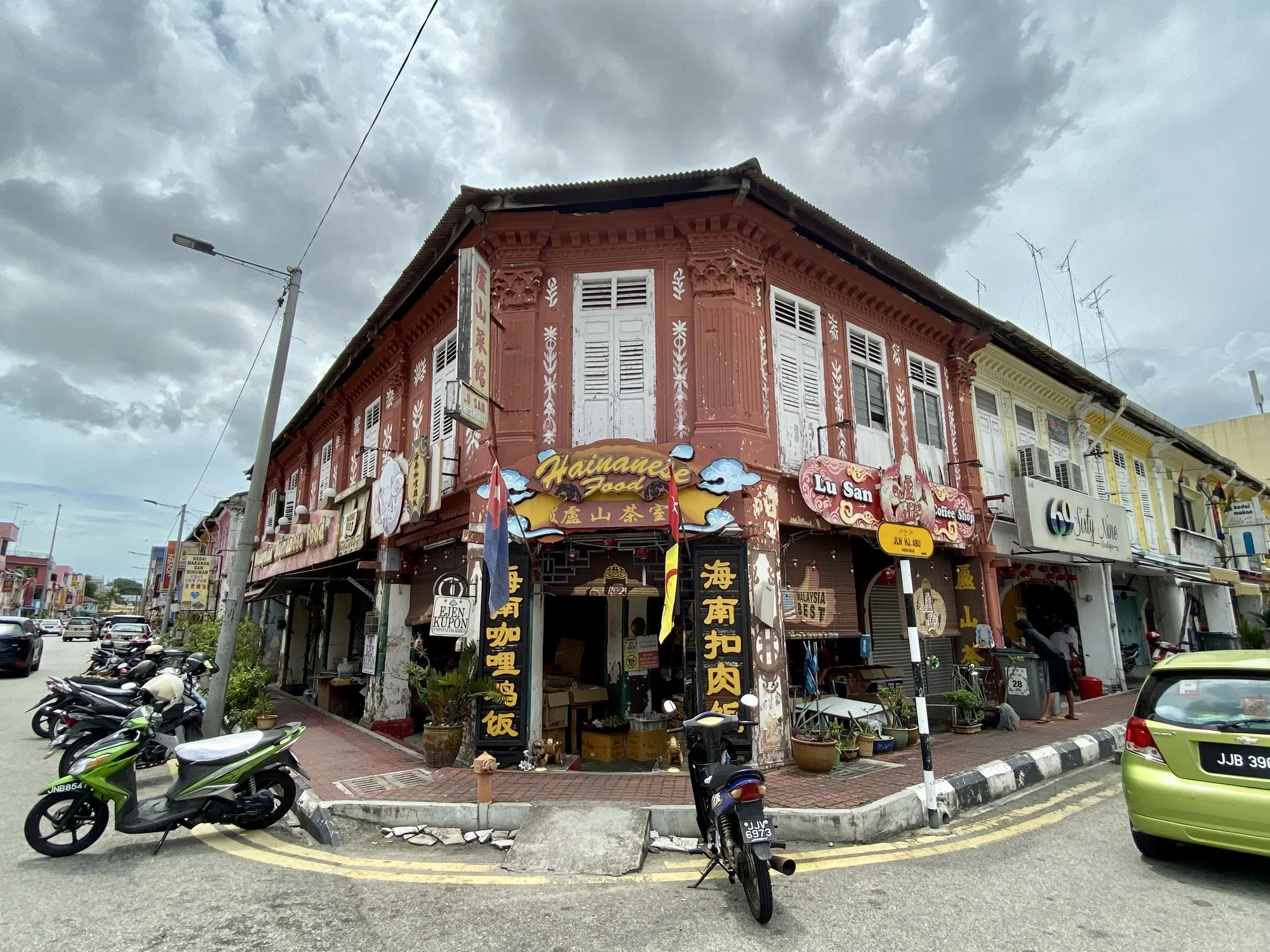
In short: A kopitiam is a traditional coffee shop found across Malaysia and Singapore. The word joins the Malay kopi (coffee) and the Hokkien tiam (shop). Kopitiams are closely linked to Hainanese migrants, who made coffee shops their trade in the 20th century. A typical kopitiam serves strong local coffee and tea, kaya toast and soft-boiled eggs. Inside, hawkers rent stalls for noodles and rice. It is also a neighbourhood meeting place, where people of different ages and backgrounds sit down together.
What does the word mean?
Kopitiam simply means “coffee shop”.
It joins Malay kopi, “coffee”, with Hokkien tiam, “shop”. Malaysia’s national dictionary lists kopitiam too, and defines it as kedai kopi, the everyday Malay term. Dictionaries describe a kopitiam as a neighbourhood cafe in Malaysia and Singapore serving traditional Malay and Chinese food and drinks, “often sold by different vendors”. Some scholars treat the whole word as Hokkien for “coffeeshop”.
Where do kopitiams come from?
Most accounts start with Hainanese migrants from southern China. Many are said to have arrived in the 19th century and worked as cooks on European ships or in households and hotels. Many cooked for British and Baba-Nyonya families, it’s said, learning Western baking and breakfasts along the way.
They later moved into coffee shops, but the stories differ on when. One account says changing conditions from the 1920s pushed the Hainanese out of service jobs and into the trade. Another dates their rise to between the 1920s and 1950s, adding that some took over shops abandoned by the British during the Japanese Occupation. Others place the turn after the Second World War, or after independence.
In George Town, researchers found kopitiams run mainly by descendants of Hainanese and Foochow (Fuzhou) migrants.
What does a kopitiam serve?
Coffee. Kopitiam coffee is usually roasted the Hainanese way. One Kuala Lumpur kopitiam owner explains that sugar and margarine are added to the beans, usually robusta, near the end of the roast, giving them a dark, glossy coat. Watch the brewing: the ground coffee is poured through a cloth bag, then poured between long-spouted jugs.
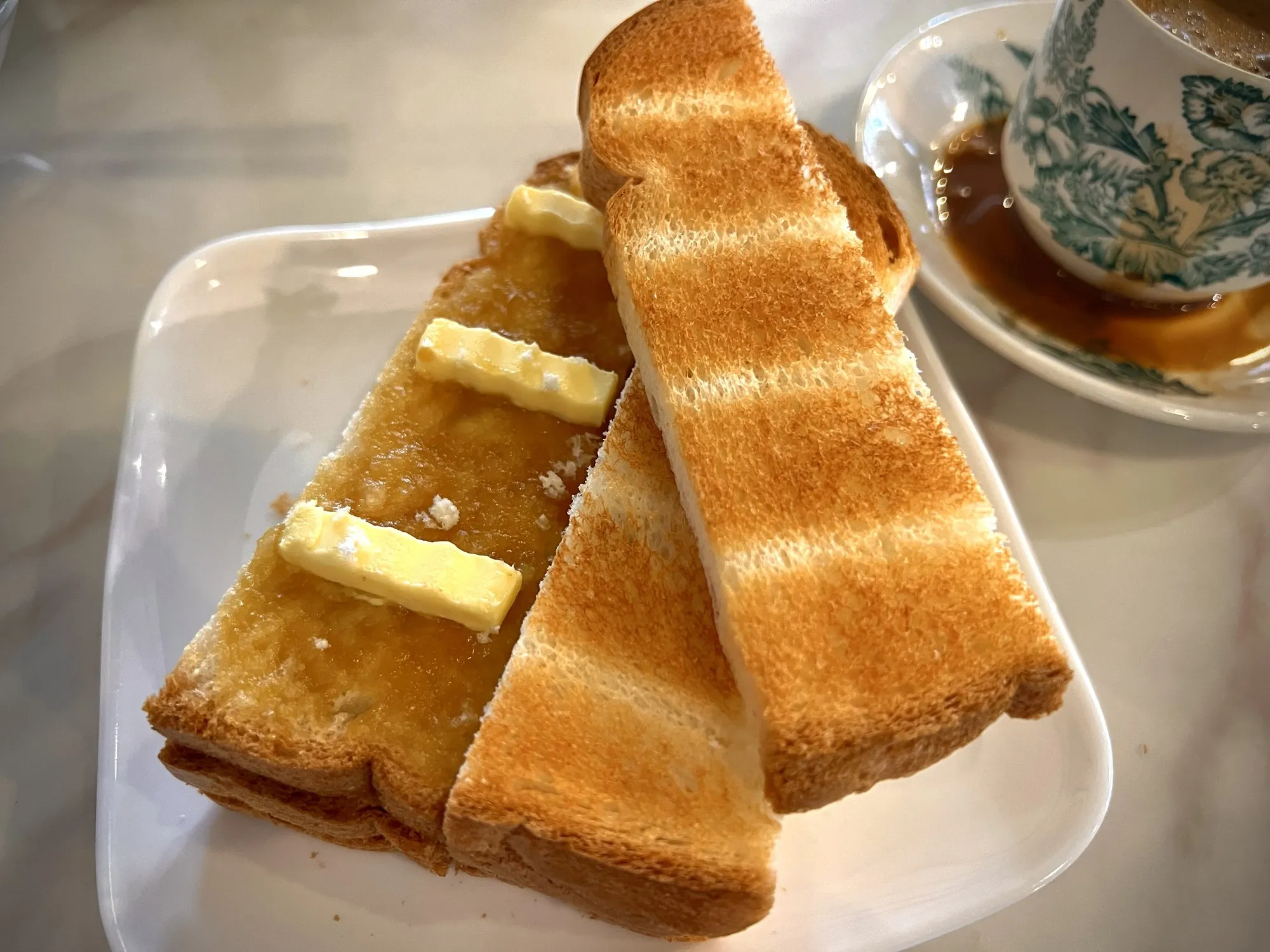
Ordering. Here are the basics. Plain kopi comes with sweetened condensed milk. Kopi O is black with sugar; kopi C comes with evaporated milk and sugar. Kosong means no sugar, and peng means iced. Tea (teh) follows the same pattern.
Nobody agrees on what the “C” stands for. One story says Carnation, a brand of evaporated milk. Hainanese coffee-shop keepers in Singapore say it’s the Hainanese pronunciation of xian (鲜), “fresh”, as in fresh milk.
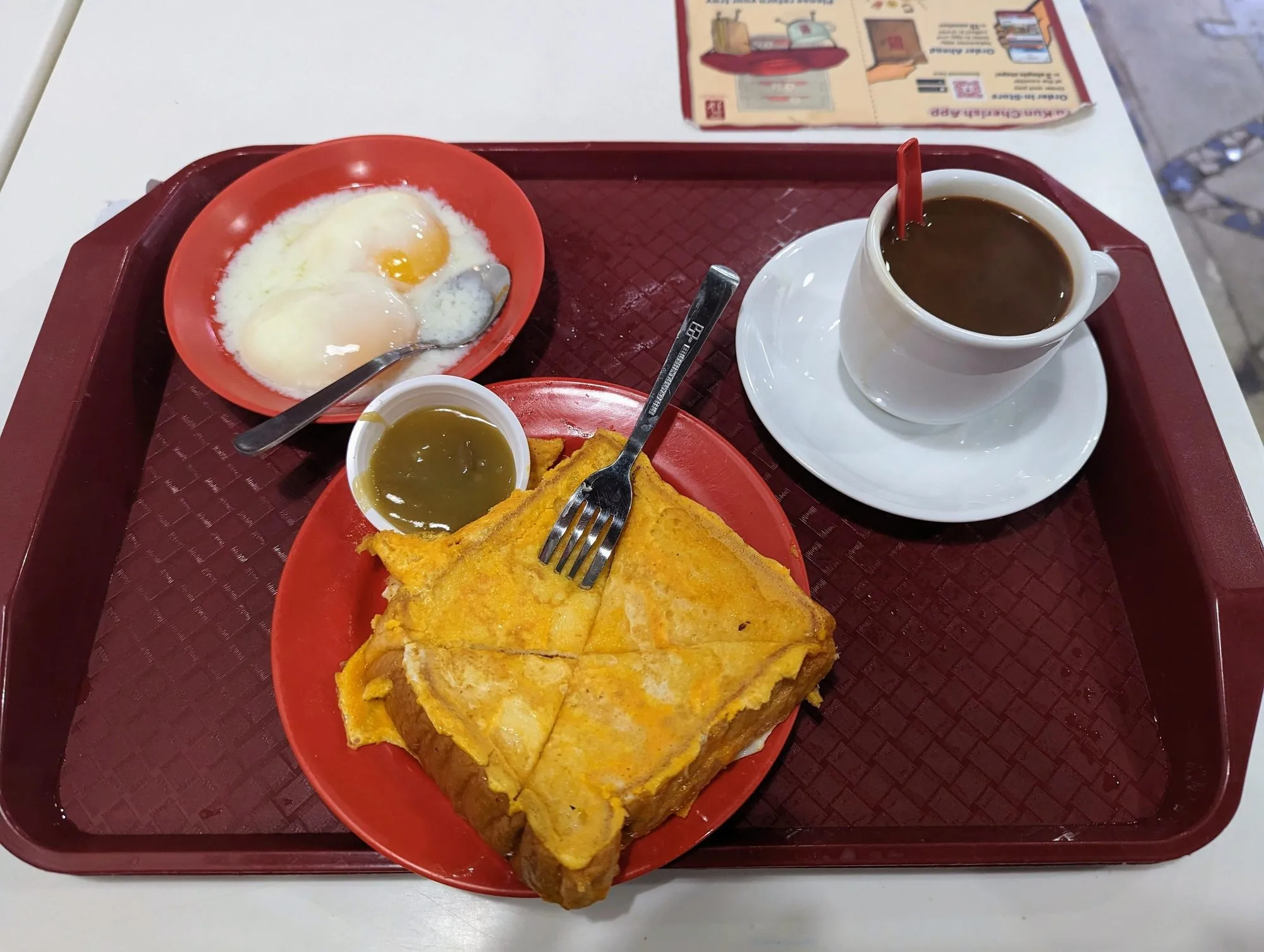
Breakfast. The classic pairing is toast spread with kaya, a coconut and egg jam, with soft-boiled eggs and coffee or tea. It’s sometimes called the “Nanyang” breakfast and linked to British breakfast habits.
Stalls. Many kopitiams are a shop within a shop. They’re usually described as family-owned: the family sells the drinks and collects rent from hawkers who run their own stalls inside. Many Hainanese coffee shops also sell Malay kuih and packed rice and noodles, and draw customers of every community.
Why is a kopitiam a social space?
Early kopitiams are described as social centres for immigrant workers, offering company, entertainment and news from home. Today’s talk, researchers say, ranges from office politics and gossip to local happenings and, at election time, politics.
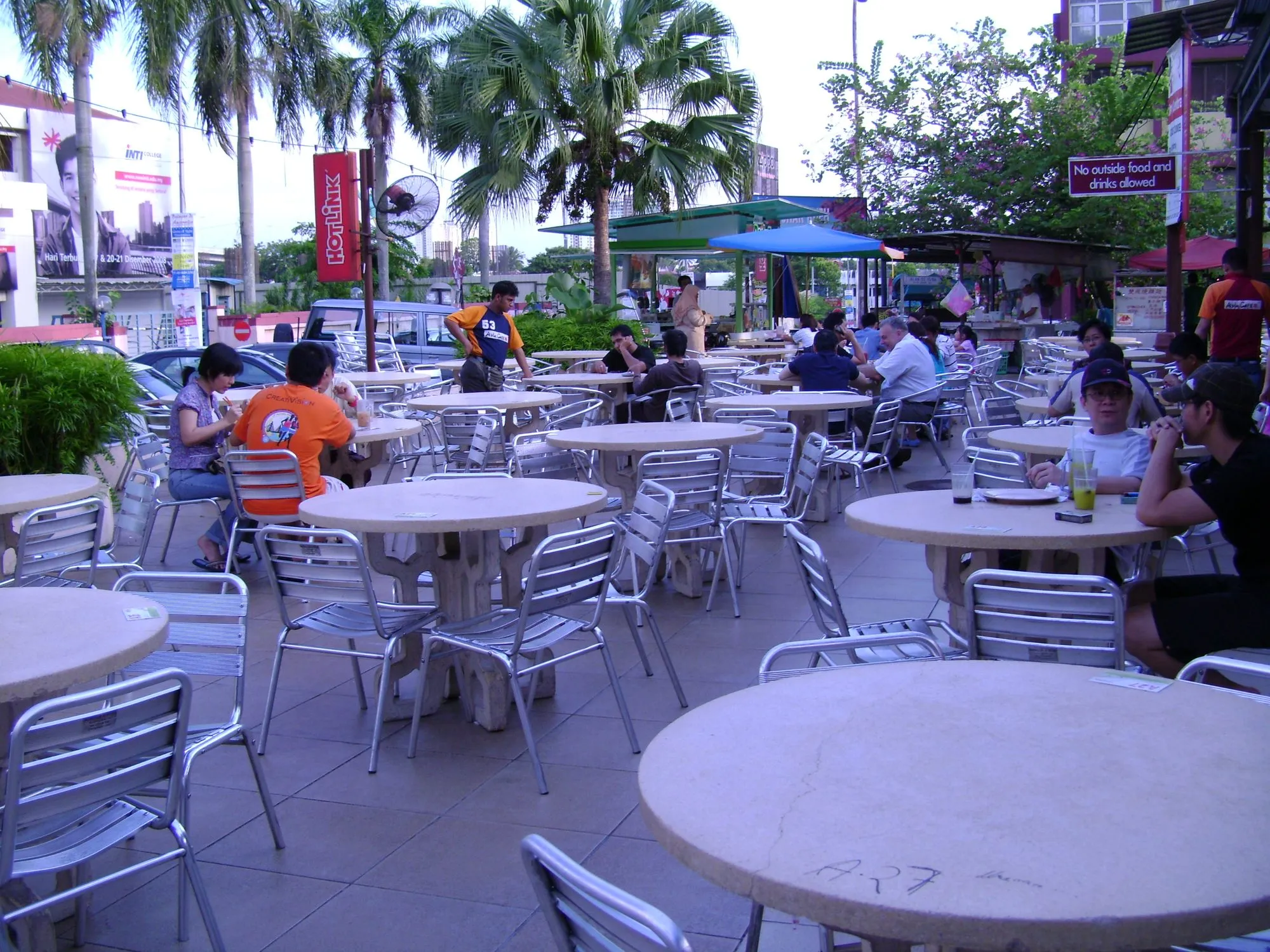
One scholar calls the kopitiam “a symbol of civic national identity in Malaysia”: a space that welcomes people across “race, class, gender and age”, found “in small towns, urban areas and their surrounding suburbs”. A third-generation kopitiam owner in Kuala Lumpur puts it more simply: “you go as you are”.
The look is part of it too. Marble-topped tables, bentwood chairs, ceiling fans and old advertisements are listed among the features customers read as “authentic”.
Old kopitiams and new ones
International coffee chains arrived in Malaysia in the 1990s. Kopitiam-style chain cafes, serving kaya toast and the usual kopi in malls and new buildings, have spread too; OldTown White Coffee, which began in Ipoh, is a leading example.
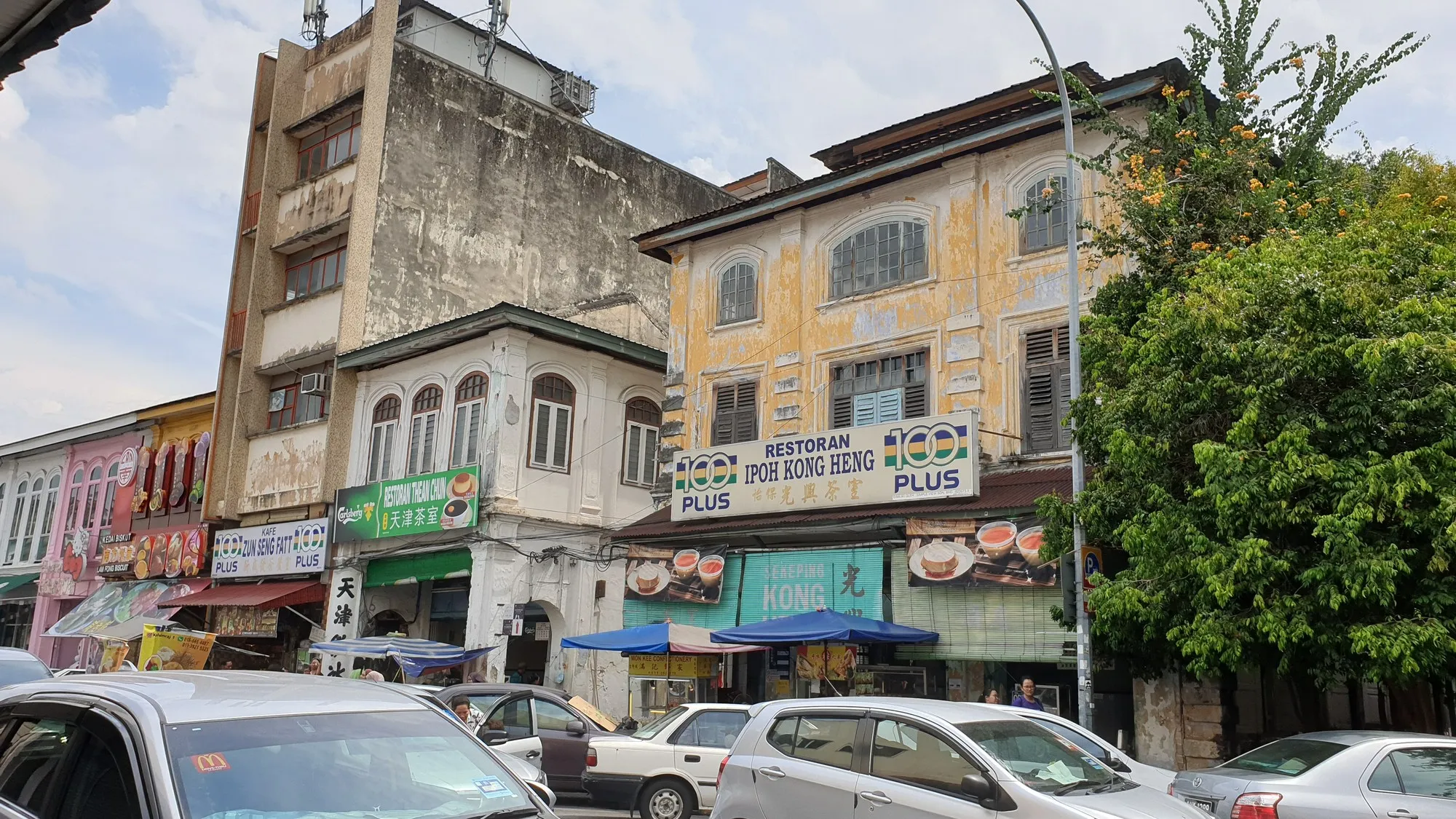
Researchers have argued that the international chains haven’t hit traditional kopitiams hard, because they serve different food to a different market. In Ipoh, the kopitiam is also home to the city’s white coffee, which we explain in our white coffee post.
What is still debated
- When the Hainanese made coffee shops their trade: the 1920s, the Japanese Occupation, after the war, or after independence.
- What “C” in kopi C means: Carnation milk, or the Hainanese word for fresh.
- Which language the word belongs to: Malay and Hokkien combined, as dictionaries say, or a Hokkien word, as some scholars put it.
Run a kopitiam with a story to tell? Claiming a listing is coming soon: see aevum.my/businesses. Have a coffee shop memory to share? Write to hi@aevum.my.
Report an error · Something wrong, incomplete or culturally insensitive? Tell us and we aim to review it within 5 working days.
Questions
What is a kopitiam?
A kopitiam is a traditional coffee shop in Malaysia and Singapore. Dictionaries define it as a neighbourhood cafe serving traditional Malay and Chinese food and drinks, often sold by different vendors. The owner usually runs the drinks counter, while hawkers rent stalls inside and sell noodles, rice and snacks.
What does the word kopitiam mean?
It means coffee shop. The word joins the Malay kopi, coffee, with the Hokkien tiam, shop. Malaysia's national Malay dictionary defines kopitiam simply as kedai kopi, the everyday Malay term for a coffee shop. Some scholars treat the whole word as Hokkien for coffeeshop.
How do you order coffee at a kopitiam?
Plain kopi usually comes with sweetened condensed milk. Kopi O is black coffee with sugar, and kopi C has evaporated milk and sugar. Add kosong for no sugar, and peng for iced, so kopi O kosong peng is iced black coffee without sugar. Tea follows the same pattern, starting from teh.
Who started Malaysia's kopitiams?
Coffee shops in Malaya are closely linked to Hainanese migrants, many of whom had worked as cooks in colonial households, hotels and ships. Over time they made the coffee shop a niche trade. Accounts disagree on when, from the 1920s to after the Second World War or independence. In George Town, researchers also found many kopitiams run by Foochow families.
Sources
Oxford Advanced Learner’s Dictionary; Dewan Bahasa dan Pustaka, PRPM (Kamus Dewan, 4th ed.); National Library Board Singapore, BiblioAsia (2018); National Heritage Board Singapore, Roots.gov.sg; Beh May Ting, Asia-Pacific Forum (Academia Sinica, 2020); Khoo Gaik Cheng in Everyday Multiculturalism (Palgrave Macmillan, 2009); Utusan Malaysia (2023); Tourism Malaysia feature on BBC.com; Makansutra (2012).